

November 21, 2026

Preparing for Hajj involves more than arranging flights, accommodation and travel documents. It also means getting ready for a physically demanding journey, often in hot weather and among very large crowds. For Canadian pilgrims, understanding the Hajj vaccination requirements Canada travellers must meet is an important part of that preparation.
The rules are set by Saudi health authorities and can change from one Hajj season to the next. This guide explains the main vaccination requirements, what Canadian pilgrims should discuss with a travel health clinic, and how to prepare for the next season without relying on outdated advice.
The Saudi Ministry of Health determines the health conditions and vaccination rules for people entering Saudi Arabia for Hajj. These are not simply Canadian travel recommendations: some vaccinations are entry requirements, while others are recommended to help protect pilgrims during the journey.
Canada’s role is to provide travel health advice and services to help residents prepare. A Canadian doctor or travel health professional can review your medical history, explain which vaccines are appropriate, and help you understand the documentation you may need. However, the final entry requirements come from Saudi authorities.
This distinction matters because advice found online may relate to a previous Hajj season, a different country of departure, or Umrah rather than Hajj. The Saudi Ministry of Health publishes season-specific guidance for pilgrims. Check the latest version before booking appointments or assuming that an older certificate will be accepted.
For Canadian pilgrims planning Hajj 2027, the requirements published for the 2026 season are useful background, not a guarantee of the next season’s rules. Recheck the official guidance when the 2027 health requirements are released. You can find updates through the Saudi Ministry of Health’s pilgrim health guidance.
The most important vaccine requirement in the Saudi Hajj guidance is protection against meningococcal meningitis. Other requirements depend on where a traveller has been living or travelling before arrival, while some vaccines are recommendations rather than universal entry conditions.
The meningitis vaccine Hajj pilgrims need to pay particular attention to is the quadrivalent meningococcal vaccine covering serogroups A, C, W and Y (often written as ACWY or ACYW). Saudi Arabia’s published Hajj guidance requires people intending to perform Hajj, arriving from all countries, to have a valid certificate showing an accepted vaccine.
In the 2026 guidance, the Ministry specified different validity periods depending on the vaccine type:
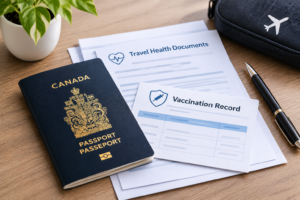
The certificate should clearly show the vaccine name or type and the date it was administered. If the vaccine type is missing, the 2026 document says it may be treated as valid for only three years. Do not rely on a verbal recollection or an incomplete record if you can obtain proper documentation.
If you received a meningococcal vaccine for a previous trip, do not automatically assume it still meets the current rule. Ask the clinic to identify which vaccine you received and check its date against the requirements for your Hajj season. The vaccine schedule and acceptable products are matters for a healthcare professional to confirm.
COVID-19 requirements can be more specific than a simple rule that every pilgrim must receive a new dose. The 2026 Saudi Hajj document required proof of vaccination or immunity for certain groups, including people with specified health risks. It also listed acceptable forms of evidence for those groups.
The categories and acceptable evidence may be revised as public health guidance changes. Your age, pregnancy status, chronic conditions and immune status may affect the advice you receive. Ask a travel health professional to check the current Saudi document and your own vaccination record rather than relying on a general social media post.
Polio requirements are linked to the countries from which travellers arrive and current international disease activity. The 2026 Saudi document listed particular countries and regions for which proof of polio vaccination was required, with the type and timing of the dose depending on the category.
Canada was not listed among the countries in the 2026 mandatory polio groups. However, a Canadian resident may have recently travelled to or lived in a country that is listed. Your travel history therefore matters, not only the passport you carry.
A travel clinic can review your itinerary and previous residence or travel and advise whether a polio dose or certificate is relevant. Do not assume that a routine childhood vaccination record automatically satisfies a specific entry requirement.
Yellow fever vaccination is required for travellers arriving from countries identified by Saudi authorities as having a yellow fever risk. It is not a blanket requirement for every Canadian departing directly from Canada.
If you are travelling to Saudi Arabia after visiting a country where yellow fever vaccination is required, ask the clinic whether you need the vaccine and an International Certificate of Vaccination or Prophylaxis. The certificate generally becomes valid 10 days after vaccination and remains valid for life under the international rules described in the 2026 Saudi guidance.
This is one reason to tell the clinic about every country on your route, including stopovers and longer visits before Hajj.
Not every vaccine mentioned in official Hajj guidance is a mandatory entry requirement. Saudi authorities also recommend that pilgrims keep routine immunizations up to date and consider seasonal protection.
The 2026 Ministry guidance recommends routine vaccines such as diphtheria, tetanus, pertussis, polio, measles, chickenpox and mumps. It also advises pilgrims to receive the updated seasonal influenza vaccine. These recommendations are especially worth discussing if you are older, have a chronic health condition, are pregnant, or have a weakened immune system.
The seasonal flu vaccine is particularly relevant because Hajj brings people together from many countries in crowded spaces. A respiratory infection can disrupt a pilgrimage even when it does not become serious. Your clinic can advise which seasonal formulation is appropriate and when to receive it.
Canadian immunization schedules and individual medical circumstances differ. Some people may need a booster, while others may already have adequate protection. Bring your vaccination record rather than trying to reconstruct your history from memory. You can also review the Government of Canada’s travel health notices and advice before departure.
A travel clinic Hajj appointment is not only about receiving a required injection. It is an opportunity to review your health before a journey that can involve extended walking, standing, heat exposure, changes in routine and close contact with large crowds.
The Government of Canada recommends visiting a travel health clinic preferably six weeks before travel. That gives time to review your health history, arrange any recommended vaccines, and make sure doses that need to be given in advance are not left until the last minute. If your departure is sooner, it is still worthwhile to book an appointment.
When arranging a consultation, tell the clinic that you are travelling for Hajj, not simply visiting Saudi Arabia as a tourist. Bring your planned travel dates, route, vaccination records, medication list and information about any medical conditions. If you are travelling with family, each person may need an individual assessment.
Ask the clinician to review:
This is especially important for seniors and pilgrims with diabetes, heart or lung conditions, kidney disease, mobility limitations or other ongoing health needs. Do not stop, change or adjust prescribed medication in preparation for Hajj without advice from the professional who manages your care.
Vaccination is one part of preparation. The broader Hajj health requirements include being prepared to manage existing conditions, reduce infection risks and cope with the physical demands of the pilgrimage.
If you take prescription medication, ask your doctor whether you should carry a medical summary or letter explaining your condition and treatment. Keep medication in its original labelled packaging and carry enough for the trip, with a reasonable allowance for delays where appropriate. Keep prescriptions and important medical information accessible.
Check Saudi rules for any medication that may be controlled or restricted. A medicine that is routinely prescribed in Canada may have different import conditions in another country. The Government of Canada advises travellers to check medication rules, carry prescriptions and keep medicines in their original containers.
Hajj can involve substantial walking, standing and moving between sites, sometimes in high temperatures and dense crowds. If you have not been active recently, speak with your healthcare provider about preparing safely. A gradual walking routine may help, but the right approach depends on your health and mobility.
Pilgrims with chronic conditions should discuss how to manage meals, hydration, rest and medication timing during long days. If you use mobility aids or need assistance, raise this with your healthcare provider and travel organiser well before departure.
Wash or sanitize your hands regularly, avoid sharing personal items, and consider wearing a mask in crowded indoor or outdoor settings, especially if you are at higher risk. Follow current public health advice if you develop symptoms before departure or during the pilgrimage.
Drink fluids regularly, seek shade when possible and avoid unnecessary exertion during the hottest parts of the day. Ask your doctor whether any medication you take could affect hydration or your ability to cope with heat. If you become unwell, tell your group leader or seek medical help rather than trying to push through the symptoms.
Use this checklist as a starting point. It does not replace the official health document for your travel season or advice from your own healthcare provider.
Not necessarily. Hajj and Umrah are both pilgrimages to Saudi Arabia, but their timing, crowd patterns and season-specific health instructions can differ. Saudi authorities publish separate health guidance for Hajj and Umrah, and requirements may also depend on the country a traveller is arriving from.
Do not assume that a certificate accepted for a previous Umrah trip will automatically meet the rules for Hajj, or that a Hajj document applies unchanged to an Umrah journey. Before travelling, check the current Saudi Ministry of Health guidance and the relevant official instructions for your trip.
For Hajj, Canadians must also use the official Nusuk Hajj platform for registration and Hajj services. The Government of Canada notes that Hajj and Umrah requirements can change with little notice, so confirm the latest information through official Saudi channels and your travel provider.
For the 2026 Hajj season, Saudi Arabia required a valid meningococcal ACWY vaccination certificate for pilgrims arriving from all countries. Polio and yellow fever requirements applied to travellers arriving from specified countries, while COVID-19 proof applied to certain groups. Requirements for a future season may change.
The 2026 Saudi Hajj guidance required the relevant meningococcal vaccine for people arriving from all countries, including Canada. The accepted vaccine type, validity period and minimum time before arrival matter. Confirm these details against the official rules for your own Hajj season.
Saudi Arabia publishes separate health requirements for Umrah. The meningococcal and other requirements may depend on the current rules and the traveller’s country of origin or travel history. Check the latest Umrah guidance before departure rather than relying on an old Hajj checklist.
No. Pilgrims should also consider routine immunizations, personal medical conditions, prescription medicines, heat exposure, hydration and infection prevention. A travel health professional can help you prepare for your circumstances.
Understanding the Hajj vaccination requirements Canada pilgrims need to meet is an important early step in planning. Start by checking the latest Saudi Ministry of Health guidance, confirming your meningococcal vaccination record and arranging a travel clinic appointment. Pay attention to the difference between mandatory entry requirements and recommended health measures, and remember that rules can change between Hajj seasons.
If you are planning Hajj 2027, you can also review Aalia Travels’ Hajj 2027 pre-registration information as you begin preparing your journey. For help discussing travel arrangements and the next steps, contact Aalia Travels. Make your health preparation part of your planning from the beginning, so you can approach this important journey with greater confidence and care.