

November 13, 2026

If you are hoping to perform Hajj in 2027, one of your first questions is likely, “When is Hajj?” The pilgrimage takes place during Dhul Hijjah, the final month of the Islamic calendar, and the expected dates for 2027 fall in May. Knowing the likely timeframe can help Canadian families plan time away from work, arrange travel and begin preparing without treating an estimated date as a final announcement.
Based on the current Saudi Umm al-Qura calendar, the central days of Hajj 2027 are expected to run from Friday, 14 May to Wednesday, 19 May. The Day of Arafah is expected on Saturday, 15 May, and Eid al-Adha on Sunday, 16 May. These dates remain subject to the official announcement following the moon sighting.
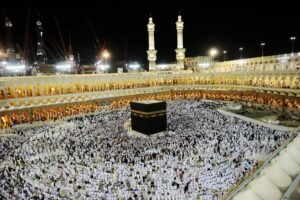
Hajj 2027 falls in the Islamic year 1448 AH. According to the current calculated Umm al-Qura calendar, 1 Dhul Hijjah 1448 is expected to fall on Friday, 7 May 2027. The main Hajj rites begin on the eighth day of the month.
Here is the expected outline:
| Islamic date | Expected Gregorian date | Significance |
| 1 Dhul Hijjah 1448 | Friday, 7 May 2027 | Expected beginning of Dhul Hijjah |
| 8 Dhul Hijjah | Friday, 14 May 2027 | Day of Tarwiyah; pilgrims proceed to Mina |
| 9 Dhul Hijjah | Saturday, 15 May 2027 | Day of Arafah; standing at Arafat |
| 10 Dhul Hijjah | Sunday, 16 May 2027 | Eid al-Adha; key rites continue |
| 11 Dhul Hijjah | Monday, 17 May 2027 | First day of Tashreeq |
| 12 Dhul Hijjah | Tuesday, 18 May 2027 | Second day of Tashreeq |
| 13 Dhul Hijjah | Wednesday, 19 May 2027 | Third day of Tashreeq |
These are calendar-based estimates, not a guarantee that the official dates will match exactly. The start of a Hijri month is tied to the lunar calendar and the relevant moon-sighting announcement. A one-day difference can affect the Gregorian dates of the days that follow.
For planning purposes, keep the expected period in mind, but wait for official confirmation before finalising non-refundable travel arrangements. You can consult the Saudi Umm al-Qura calendar as a calendar reference and check official Hajj announcements as the season approaches.
The Islamic calendar is lunar. Each month begins with the new crescent moon, and months have either 29 or 30 days. As a result, the Hijri year is shorter than the Gregorian solar year by roughly ten or eleven days.
That is why Hajj moves earlier on the Gregorian calendar each year. A Hajj season that took place in June one year may fall in May the next, and later move into April.
Dhul Hijjah 1448 is the twelfth month of the Islamic year 1448. Hajj’s central rites begin on the eighth and continue through the thirteenth. For the rites in Saudi Arabia, pilgrims must follow the dates and instructions set by the Saudi authorities. For Eid and fasting in Canada, follow the guidance of your local mosque or trusted religious authority.
Understanding the sequence makes the dates easier to remember. Hajj is not a single-day event; it is a series of rites carried out over several days in and around Makkah.
The eighth day is commonly known as the Day of Tarwiyah. Pilgrims undertaking Hajj generally enter or remain in ihram according to their chosen Hajj type and proceed to Mina, where they spend time in worship, prayer and remembrance.
Mina is a tent city outside central Makkah. Pilgrims travel there as part of the organised movement between the Hajj sites. The day is an important transition from preparation in Makkah to the central rites that follow.
For first-time pilgrims, it helps to understand that the journey between Makkah, Mina, Arafat and Muzdalifah is coordinated and can involve waiting, walking and crowded conditions. Follow your group leader’s instructions rather than trying to make independent travel arrangements.
The Day of Arafah is one of the most significant days of Hajj. Pilgrims gather at Arafat for supplication, reflection and worship. Standing at Arafat is a central pillar of Hajj, so pilgrims must follow the official schedule and their group’s guidance closely.
The Day of Arafah 2027 is currently expected on Saturday, 15 May. Non-pilgrims may observe the day through worship and fasting. The fast is widely recommended for Muslims who are not performing Hajj, while pilgrims at Arafat generally do not fast so they can maintain their strength. For personal religious or health questions, seek qualified guidance.
After sunset, pilgrims travel to Muzdalifah, spend part of the night there and perform the prayers according to the applicable guidance. Timing and movement follow the authorities’ arrangements.
The tenth day is Eid al-Adha, also known as the Festival of Sacrifice. For pilgrims, it is a day of several important rites. These include the stoning of the largest Jamarah, the prescribed sacrifice for those to whom it applies, shaving or trimming the hair, and the Tawaf al-Ifadah at the Kaaba, with related rites according to the pilgrim’s Hajj type and scholarly guidance.
The order and timing of some actions can differ depending on circumstances and the Hajj arrangement. Pilgrims should follow their group’s qualified religious guidance and the official movement schedule rather than relying on a generic online checklist as a personal ruling.
Eid al-Adha is also celebrated by Muslims around the world. In Canada, families may attend Eid prayers, share meals and arrange qurbani where appropriate. The local Eid date should be confirmed through the mosque or community authority you follow.
The three days after Eid are known as the Days of Tashreeq. Pilgrims generally remain in Mina and perform the prescribed stoning at the Jamarat, following the authorised schedule and safety instructions.
Depending on individual circumstances and the applicable rules, departure from Mina may take place after the second or third day. Confirm the arrangement with your group’s scholar and organiser; the official rules for that season take precedence.
These days are part of Hajj, not sightseeing days. Crowds, distances and physical demands can be challenging, especially for older pilgrims and anyone with mobility needs.
The main Hajj rites span several days, generally from 8 to 13 Dhul Hijjah. However, the full trip from Canada is usually longer because pilgrims need time for international flights, arrival procedures, accommodation in Makkah and possibly Madinah, and preparation before the rites begin.
The length of a package depends on its itinerary. Some travellers may arrive in Saudi Arabia well before the Hajj days, while others may have a different sequence of stays and departure arrangements. If a package includes time in Madinah, that will also affect the overall duration.
For Canadians travelling from Toronto or elsewhere, allow for long-haul travel, time-zone changes and recovery after arrival. Families with children, seniors or people needing additional assistance should consider the itinerary’s pace, hotel location, transport and walking requirements.
Ask for proposed arrival and departure dates, nights in each city, the Hajj-day schedule and transfer support. Packages can differ considerably even though the core Hajj dates are the same.
If you are considering Hajj in 2027, begin preparing well before May. Registration windows, country eligibility, package availability, visa procedures, health requirements and deadlines are set by the relevant authorities and can change each season.
Follow the authorised process. Check the Saudi Ministry of Hajj and Umrah for instructions and use the official Nusuk Hajj platform for registration and booking. An agency interest list or early enquiry is not official approval or a confirmed booking.
A travel agency can explain its arrangements, flights, accommodation, ground services and guidance, but cannot guarantee a place or issue a Hajj visa outside the official process. Aalia Travels offers Hajj 2027 pre-registration support; see the Hajj 2027 information while monitoring official announcements.
Use this list as a starting point while dates and official procedures are being confirmed:

The main Hajj rites are expected to begin on Friday, 14 May 2027, corresponding to 8 Dhul Hijjah 1448, according to the current calculated calendar. The final dates depend on the official announcement.
The Day of Arafah is expected on Saturday, 15 May 2027, corresponding to 9 Dhul Hijjah 1448. This is an estimate until the start of the month is officially confirmed.
Eid al-Adha is expected on Sunday, 16 May 2027, corresponding to 10 Dhul Hijjah 1448. Canadian communities should confirm their local observance date with their mosque or religious authority.
There is no safe universal deadline to quote before the official 2027 instructions are published. Monitor Nusuk and Saudi government announcements for the opening of registration, country eligibility, package selection and payment deadlines. Start preparing your passport and travel documents early.
The cost depends on the package, accommodation, flights, length of stay, services and availability. Do not rely on unofficial estimates as confirmed prices. Review current package details when they are published and ask for a written breakdown of inclusions and exclusions.
The expected Hajj 2027 dates place the main rites in mid-May, with the Day of Arafah currently expected on 15 May and Eid al-Adha on 16 May. These dates offer a useful starting point for planning, but the official moon-sighting announcement will determine the confirmed calendar.
If Hajj is your intention, begin preparing your documents, discuss travel needs with your family and learn the sequence of the rites. Keep checking official Saudi updates, and make major commitments only when the relevant dates and arrangements are confirmed. For help understanding travel options and Hajj 2027 planning, Aalia Travels can discuss its available support and packages with you. May your preparations be made easy and may Allah grant you a safe and accepted pilgrimage.